


Buy an ethnic co-ord set if you want a modern Indo-Western look you can split into separates and re-wear through the year. Buy a kurta set if you want traditional coverage and one complete, put-together outfit for festive days, family functions and formal offices.
|
Key Takeaways
|
Quick comparison: ethnic co-ord set vs kurta set
|
Attribute |
Ethnic co-ord set |
Kurta set |
|
Vibe and aesthetic |
Modern, Indo-Western, contemporary |
Traditional, graceful, classic |
|
Silhouette |
Shorter top peplum, tunic or shirt style with a matching pant or skirt |
Longer knee or ankle-length kurta with palazzo, pants or salwar |
|
Versatility and re-wear |
High. Top and bottom both pair with other pieces you already own |
Medium. Usually worn as a complete matching set |
|
Best occasions |
Brunches, travel, creative offices, modern parties |
Weddings, religious occasions, festivals, conservative offices |
|
Maintenance |
Generally easier to hand wash at home |
Needs more care if the work is heavy or embroidered |
What exactly is an ethnic co-ord set?
An ethnic co-ord set is a matching two-piece outfit where a shorter ethnic top is sold with a bottom cut from the same fabric or print. The top is usually a peplum, a straight tunic or a shirt-style kurti. The bottom is usually a straight pant, palazzo or skirt. The whole point is that the pairing is already decided for you.
What exactly is a kurta set?
A women's kurta set is a longer kurta, usually knee to ankle length, sold with a coordinated bottom and sometimes a dupatta. The kurta is the main garment and the bottom supports it. Because the length covers more, it reads as traditional ethnic wear even when the print is modern. It is the closest thing Indian womenswear has to a complete formal outfit.
Why would you choose an ethnic co-ord set?
Because you get more than one outfit out of it. That is the honest answer, and it is the only one of these two that is genuinely better on that count.
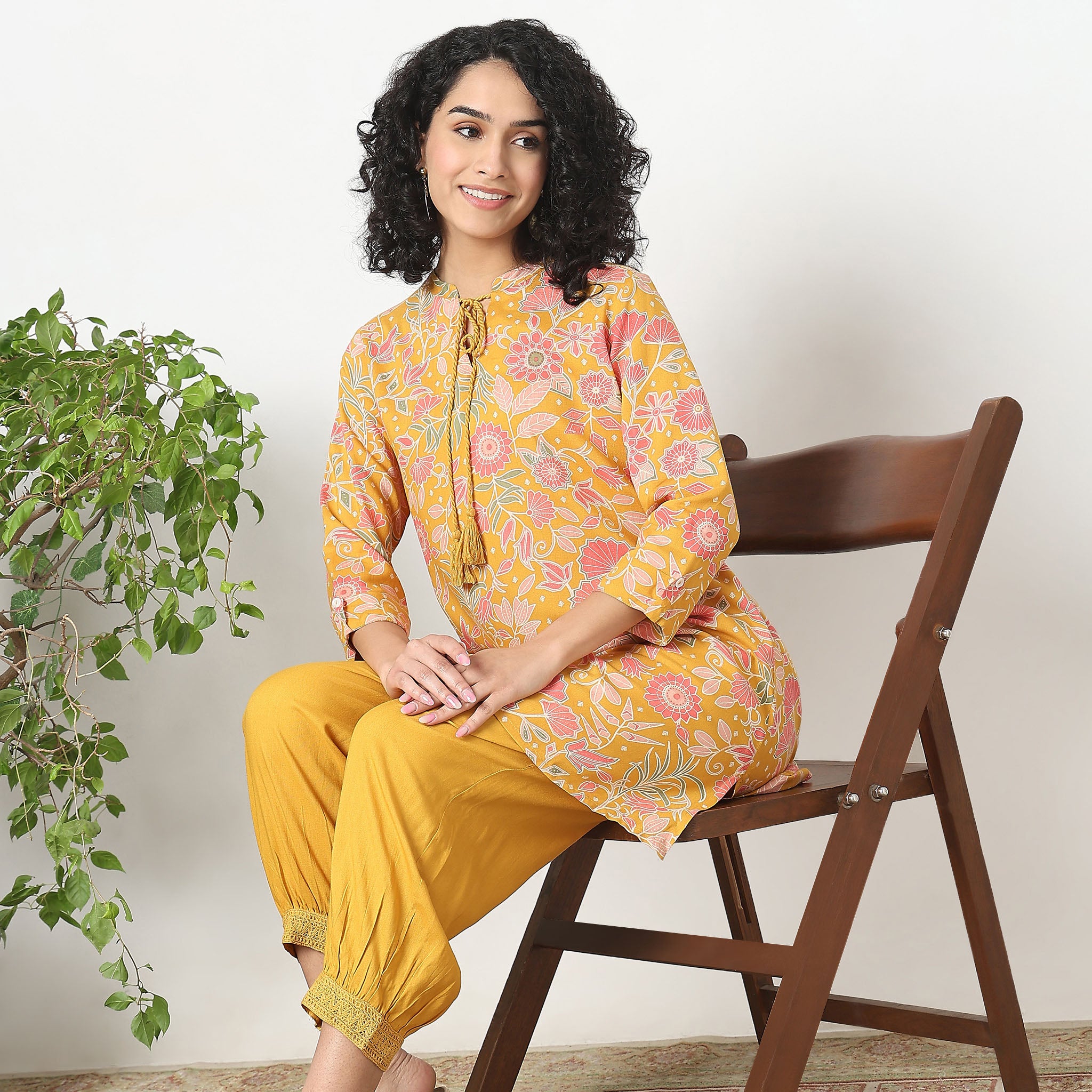
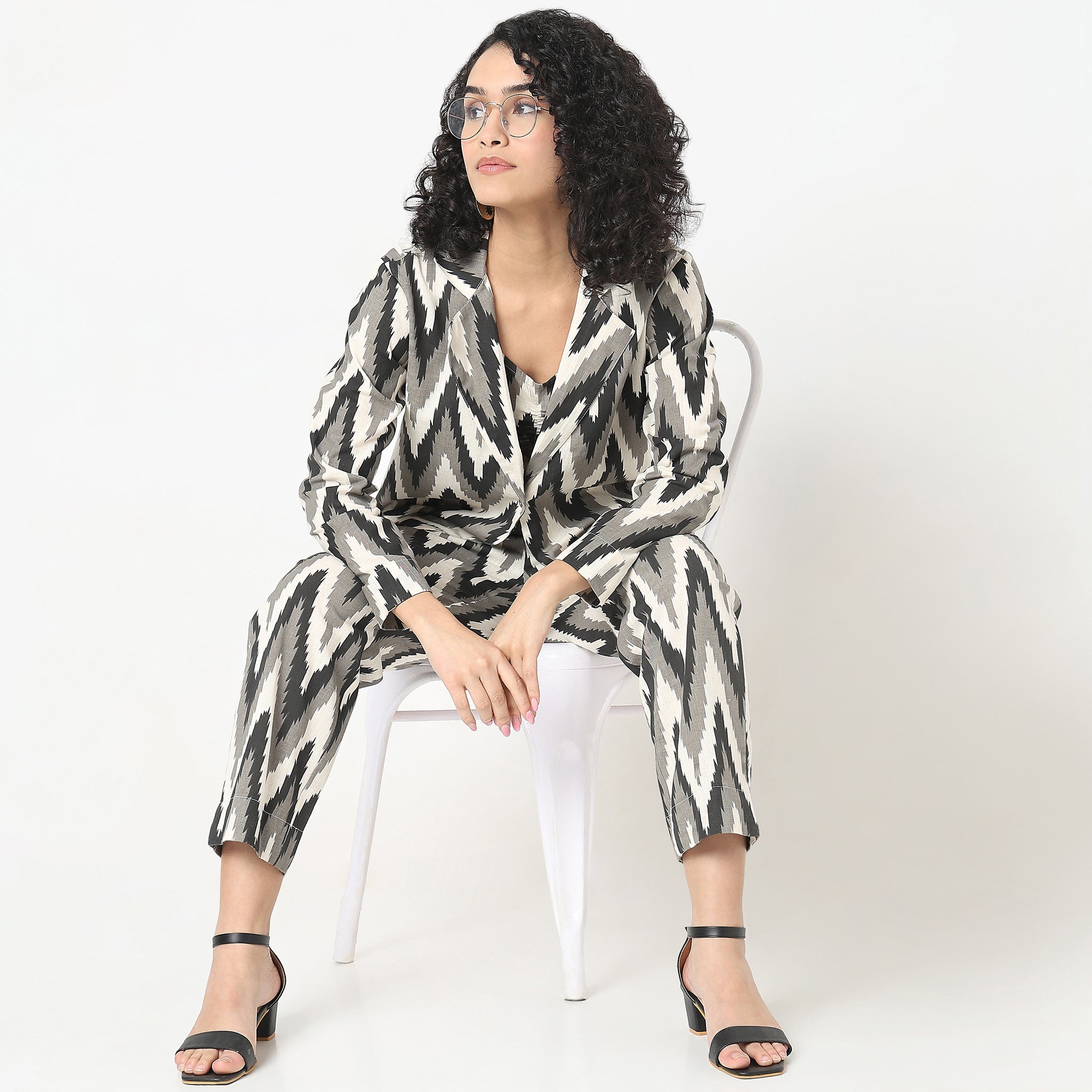
The advantage: mix-and-match potential.
What it means in practice: a block-printed peplum top works with straight-leg blue jeans on a Saturday. The matching straight pants work with a plain white t-shirt on a Wednesday. One purchase quietly becomes three or four outfits. If you are still deciding what to look for in a set, our simple buying guide to picking a co-ord set that fits well covers fabric, fit and colour in more detail.
Where it matters most: a wardrobe you are still building, where every piece needs to earn its hanger.
The advantage: travel-friendly.
What it means in practice: a co-ord packs as two pieces but wears as one decision. Ribbed knits, rayon and cotton-viscose blends come out of a suitcase without needing an iron, which a starched cotton kurta will not.
Where it matters most: weekend trips and work travel, where you are dressing out of a small bag.
The advantage: instantly put together.
What it means in practice: nobody has to work out whether the bottom matches. A tie-dye or geometric print set in a single colour family does the coordinating for you.
Where it matters most: a morning when you have eleven minutes. That matters more than it sounds.
Why would you choose a kurta set?
Because there are rooms you walk into where a kurta set is simply the correct answer and nothing else quite is.
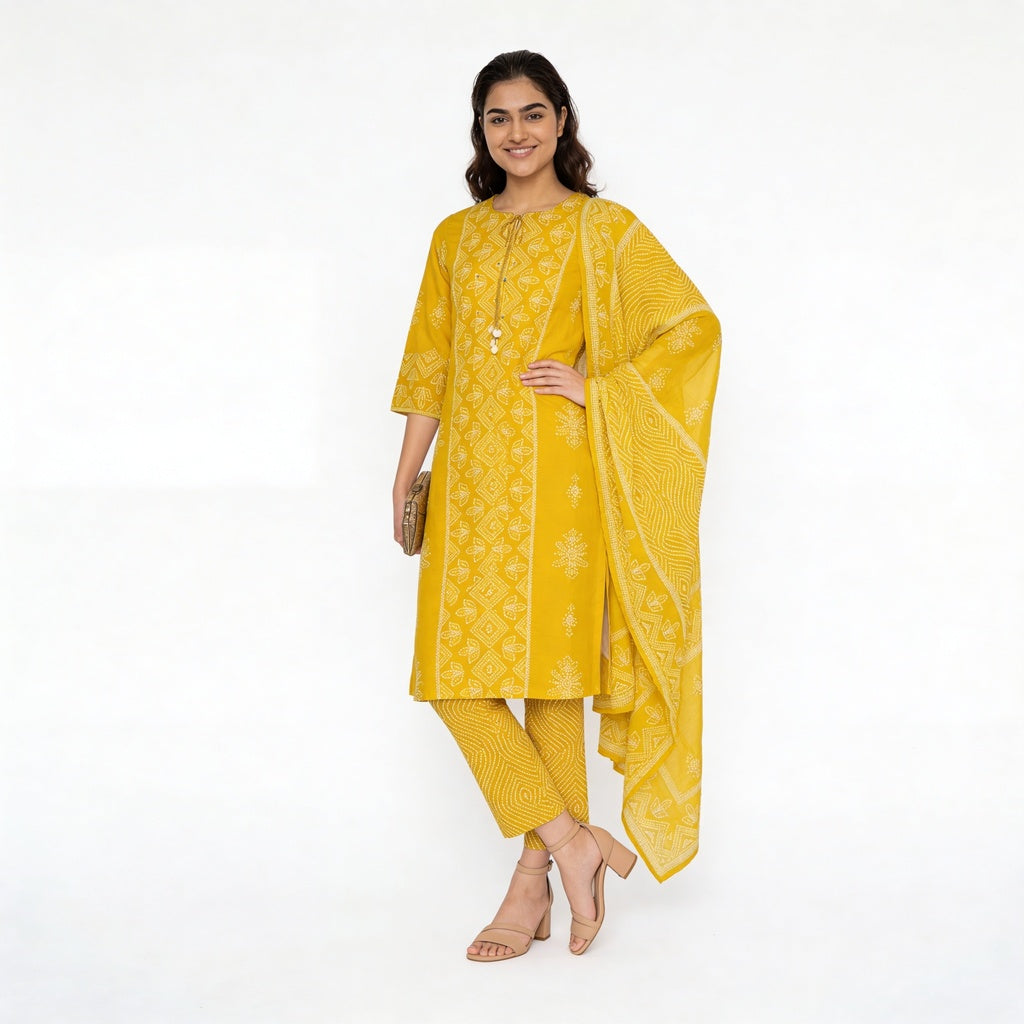

The advantage: coverage you do not have to think about.
What it means in practice: a knee-length or ankle-length kurta lets you sit on the floor for a puja, bend to touch feet, and get through a four-hour function without adjusting anything. Many kurta sets also come with a dupatta, which a co-ord never does, and that extra layer is what lets you cover your head at a temple or a ceremony without planning for it.
Where it matters most: long religious functions and any occasion where you will be sitting on the floor.
The advantage: occasion-appropriateness.
What it means in practice: at a wedding, a mehendi or a temple visit, a kurta set never looks like you misread the invite. For picking the right one, the complete guide to buying kurta sets for women walks through length, fit and detailing, and there are more outfit ideas in our guide on how to style kurta sets for different occasions.
Where it matters most: anywhere older relatives will be present and you would rather not think about it.
The advantage: traditional detailing.
What it means in practice: chikankari, block prints, gota work and thread embroidery sit naturally on a longer kurta because there is room for the work to breathe. On a cropped co-ord top the same detailing often looks crowded.
Where it matters most: festive dressing, where the detail is the point of the outfit.
Which one works better for the office?
For a corporate or conservative office, a straight-cut kurta set is the safer daily choice. For a creative or start-up office, a solid-colour ethnic co-ord set in a structured fabric reads perfectly professional and gives you far more mileage across the week. The deciding factor is not the garment, it is the print. Solid colours and small repeat prints read formal. Large florals do not, in either category.
Which one is more comfortable for Indian summers?
Both, if you buy the right fabric, and neither if you do not. Cotton, mulmul and light rayon breathe well in Indian heat and humidity, whether they are cut into a co-ord or a kurta set. Heavy georgette and lined embroidered fabric will feel the same amount of unpleasant in either shape. Length is the second factor. An ankle-length kurta over palazzos traps a little more air than a co-ord with a cropped top, so if you commute in the afternoon that is worth knowing. Our guide on choosing the right kurta set fabric for the season goes into which weaves hold up through a full working day.
|
Quick answer: which should you buy?
|
Can you wear an ethnic co-ord set as separates?
Yes, and this is where the set earns back its price. Three pairings that work without looking like a broken set:
- Printed co-ord top with straight-leg blue jeans. Add flat sandals and it becomes a Sunday brunch outfit.
- Co-ord trousers or palazzo with a plain white or black t-shirt. Quietly one of the most useful office combinations you own.
- Co-ord top layered under a long open shrug, with the matching bottom. Same set, different silhouette, and it carries into a cooler evening.
If you want more pairing ideas for the top half, the piece on the types of tops worth building a wardrobe around is a useful companion read. And when the festive season comes round, our edit of festive co-ord sets for the celebration season shows the dressier end of the same idea.
So which one should you actually buy?
Here is the part that surprises most people: at Style Union both categories start at the same place, ₹799. Price is not the tiebreaker. That is unusual, and it means the decision is purely about how you will actually use the outfit rather than what you can stretch to this month.
So if you are building a wardrobe rather than solving one occasion, buy the co-ord set first and the kurta set second. The co-ord will get worn more often. The kurta set will get worn on the days that matter more. Most women end up owning both within a year, and that is the right outcome.
Both sit in the same women's ethnic and fusion range at Style Union, so you can compare length, fabric and drape side by side rather than guessing across two categories. Because we price honestly, with no discounts, no inflated tags and no fake sales, that ₹799 is a real starting price rather than one waiting to be marked down. If you would rather judge the fall of a kurta in person before deciding, our 170+ stores across India stock both, and the 16 lakh+ Google reviews behind our 4.8-star rating will tell you how each one fits before you ever reach a trial room. Never Blend In.


