


|
Key Takeaways
|
Cotton knit does not hold a fixed shape. It relaxes under heat, distorts under machine agitation, and stretches under its own wet weight. That last one causes most of the damage in Indian homes, because a wet tee hung on a hanger to dry pulls downward for hours. Change the drying habit and most women t-shirts keep their shape far longer.
Why does a cotton t-shirt lose its shape after just a few washes?
Three things happen, and they happen in sequence. First, relaxation shrinkage: the yarn is stretched during knitting and pulls back to its natural length the first time it meets hot water. Second, fibre distortion: the drum agitates the knit loops out of alignment, so the fabric no longer springs back the way it did. Third, wet weight: a soaked t-shirt is roughly three times heavier than a dry one, and gravity does the rest.
So a tee can shrink in length and stretch in width at the same time. That is why it comes out shorter, wider and slightly twisted after four or five washes.
Is the fabric the problem, or the way it's being washed?
Usually the washing and drying. Fabric decides how fast the damage shows, but habit decides whether it happens at all. A well-made 100% cotton tee washed in cold water and dried flat will outlast a blended one washed hot and hung wet.
What 100% cotton does in the wash
Pure cotton has no elastic recovery. Once the knit loops are pulled out of shape, nothing pulls them back. It breathes best in Indian humidity, which is why it stays the default for daily wear, but it demands more care. Expect 3–5% shrinkage in the first two washes on a tee that has not been pre-shrunk.
Why cotton blends hold shape longer, and what you give up
A small percentage of elastane gives the knit memory, so the neckline and hem snap back. Polyester blends resist shrinkage almost entirely. The trade-off is real: blends breathe less in humid weather and pill faster at the underarm and side seams. Elastane also degrades with heat, so a hot wash turns a stretch tee into a baggy one permanently.
Why does the neckline stretch out before the rest of the t-shirt?
Because the neck rib is the narrowest, most heavily worked part of the garment, and it carries the load in two situations most people repeat daily: pulling the tee over the head, and hanging it wet. Ribbed collars are knitted tighter than the body precisely so they can recover, but recovery has a limit and heat shortens it. If your tees are going wide at the neck first, the hanger is the likely cause.
What is the correct way to wash and dry a t-shirt so it keeps its shape?
Cold water, short cycle, low spin, dried flat. That covers about 90% of the problem.
Wash temperature and cycle
Wash at 30°C or cold. Turn the tee inside out to protect print and surface fibres, and use a gentle or delicate cycle. Long spin cycles are the single most damaging setting on a machine for knits, because they press the fabric against the drum wall under force.
The drying mistake most people make
Do not hang a wet knit tee on a hanger. Dry it flat on a rack or fold it over a line at the waist so the weight is shared, not pulled through the shoulders. This one change prevents most shoulder droop and neckline gape.
Folding, storing and ironing
Fold t-shirts, never hang them long-term. Iron on medium heat while slightly damp, and keep the iron off the neck rib entirely.
|
Fabric |
Shrinkage risk |
Shape retention |
Breathability in humidity |
How to wash |
|
100% cotton |
High (3–5% first washes) |
Moderate, no recovery |
Best |
Cold, gentle, dry flat |
|
Cotton + 5% elastane |
Low |
Best, until heat kills the stretch |
Good |
Cold only, never tumble dry |
|
Cotton-poly blend |
Very low |
Good |
Moderate, pills faster |
Cold or warm, low spin |
Can a stretched t-shirt be brought back to shape?
Partially. A stretched neckline often responds to a soak in lukewarm water, gentle reshaping by hand, and flat drying, because you are re-setting relaxed loops rather than repairing them. A shoulder seam that has dropped from hanger weight is structural and will not come back. Overall body stretch from repeated hot washes is also permanent.
What should you look for in a t-shirt that will hold its shape?
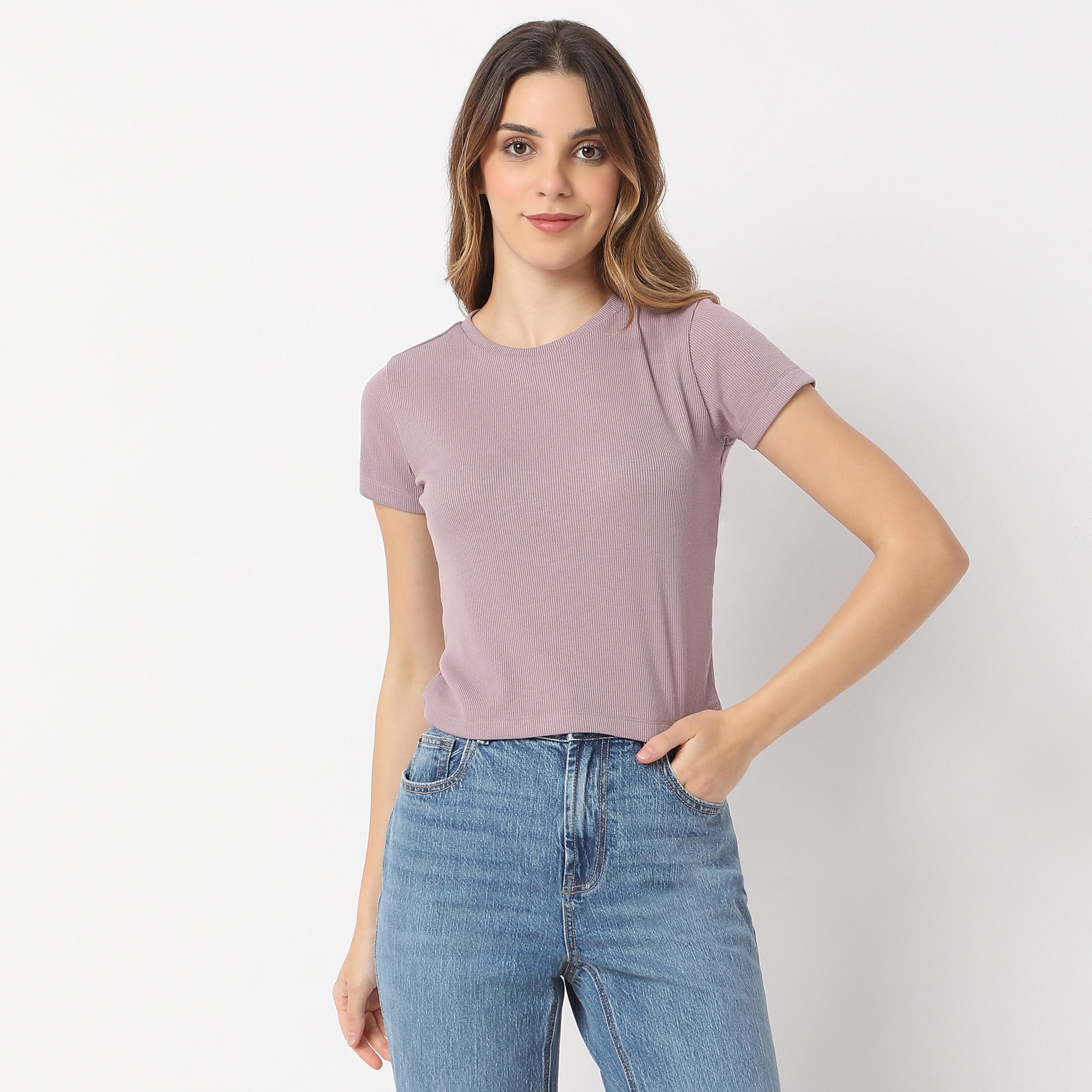
Check the weight first. A tee in the 160–180 GSM range holds structure through daily wear; anything much lighter is a summer-only piece that will go limp. Then check the neck rib, which should feel dense and springy rather than thin, and look for shoulder-to-shoulder taping, which stops the shoulder line from stretching sideways. The cotton tees in the Style Union women's t-shirt range are mid-weight knits built for repeat wear, which matters more than any single wash tip.

One more thing worth correcting: buying a size up does not prevent shrinkage. It changes the fit you start with, not how the fibre behaves. If you are unsure which size to order, the difference between cut and size is explained properly in our guide to choosing between an oversized and a regular fit t-shirt, and the wider category logic sits in the different types of tops for women explained.
Most shape loss is a drying-habit problem before it is a fabric problem. Fix the hanger habit, drop the wash temperature, and the same t-shirts will last a year longer. The second lever is buying the right weight of knit in the first place.
Style Union runs 170+ stores across India with a 4.8-star Google rating and 16 lakh+ customer reviews, and prices stay fixed year-round with no discounts or inflated tags.


